


A.B. Graham believed rural youth needed more opportunities for practical learning experiences in agriculture and science. As a school superintendent in Ohio, he recruited 85 students and founded the Boys’ and Girls’ Agriculture Experiment Club. One month later, O.J. Kern, another school superintendent in Illinois, established a similar group. These early predecessors to 4-H clubs were called “Tomato Clubs,” “Corn Clubs,” “Pig Clubs” and “Canning Clubs.”
Agricultural and corn clubs are formed in Ohio, Illinois, and Minnesota. These youth clubs are established by some of the figures now considered the “founders” of 4-H, including A.B. Graham, Jesse Field, O.H. Benson, O.J. Kern, and T.A. Erickson. Many of these founders came from education backgrounds, including school teachers, college staff, and school superintendents.
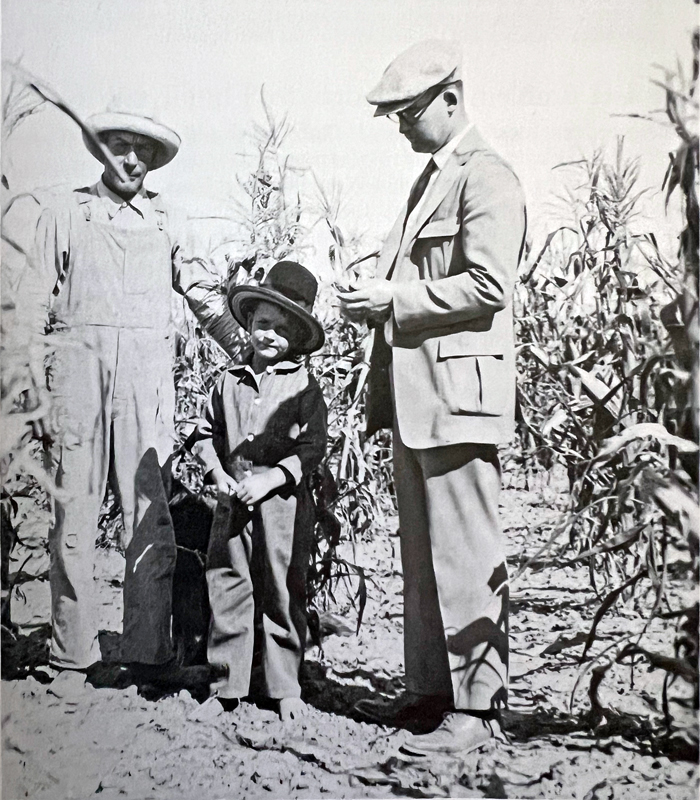
Montana state 4-H leader Charles E. Potter (right), visits with a 4-H corn club member and leader, circa 1920.
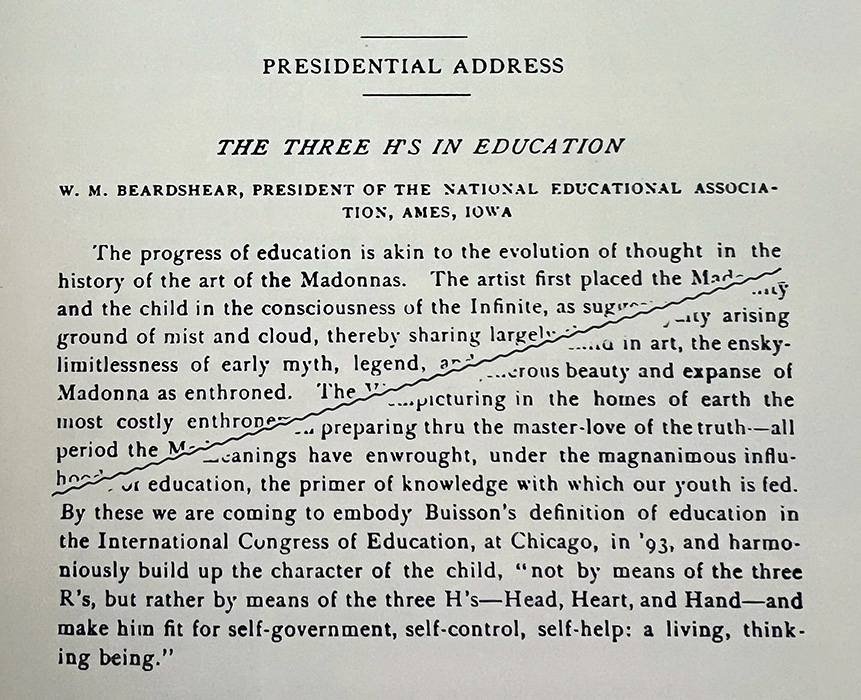
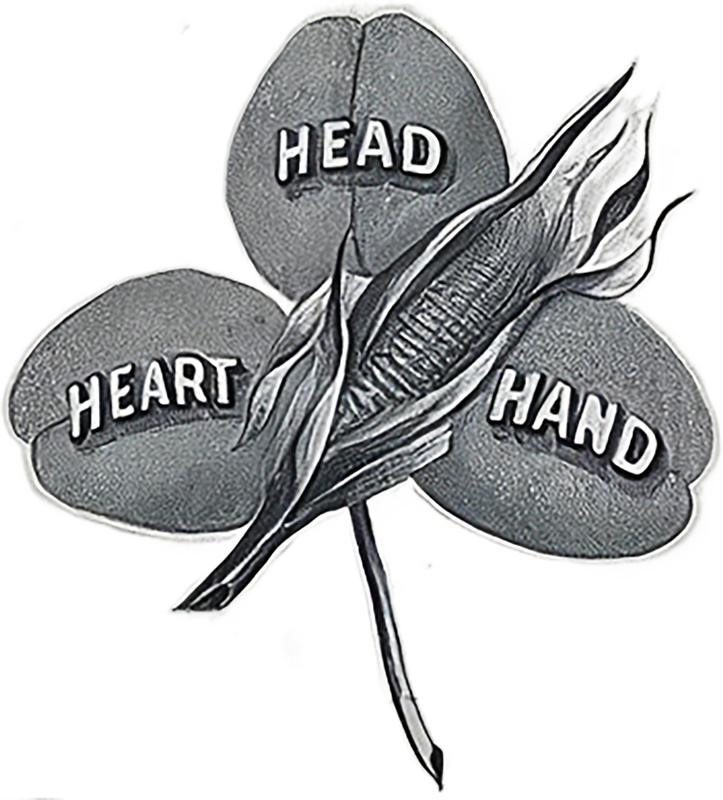
“Head, heart, and hand” is a phrase increasingly used by notables including Booker T. Washington and Rudyard Kipling. At a National Education Association Conference, it is recommended that students “build character not by the three R’s, but by the three H’s.” This will become the basis of the 4-H pledge.
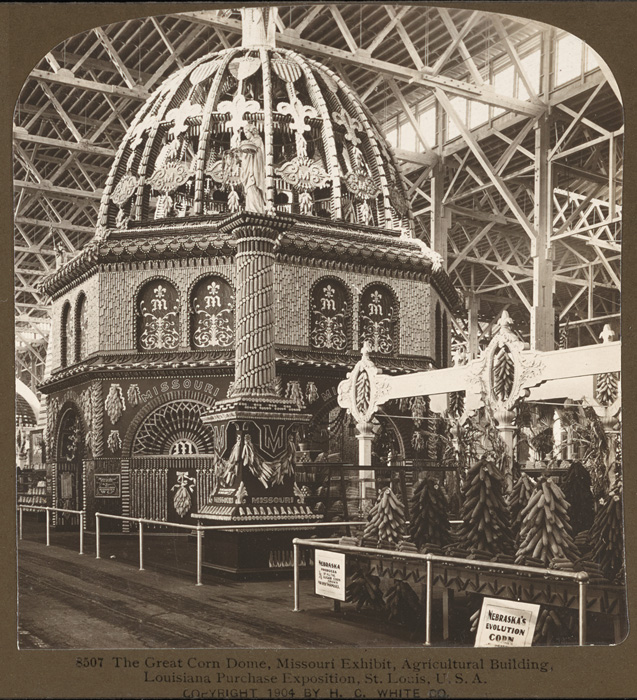
An exhibit at the Louisiana Purchase Exposition featured ears of corn and photos of the youth who grew them. With over 8,000 participants, this display demonstrated that rural youth would respond to public recognition and encouragement.
Setting goals, dedicating efforts towards a project, and exhibiting the outcome are all components of the 4-H model, and this is an early example of the process.
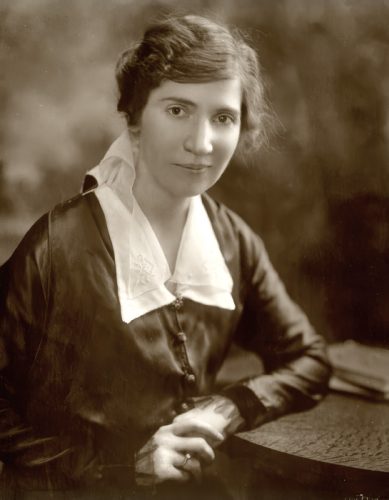
Jessie Field Shambaugh is called the “Mother of 4-H.” She would begin her pioneering 4-H work in 1906, but prior to relocating to Iowa, Jesse worked as the principal of Jefferson Elementary School in Helena, Montana. Field documents her life as an educator in A Real Country Teacher, published in 1922.
Beginning in 1906, Jesse established clubs throughout Page County, Iowa, where she served as superintendent. Girls’ Home Clubs focused on sewing, cooking, gardening, and child care, while Boys’ Corn Clubs taught farm management, livestock and crop judging, and self-governance. By 1909, Jesse Field, and O.H. Benson, superintendent of Wright County schools, were using the clover, a symbol that would soon become the 4-H emblem. Various records cite both Field and Benson designing the 3-leaf clover.
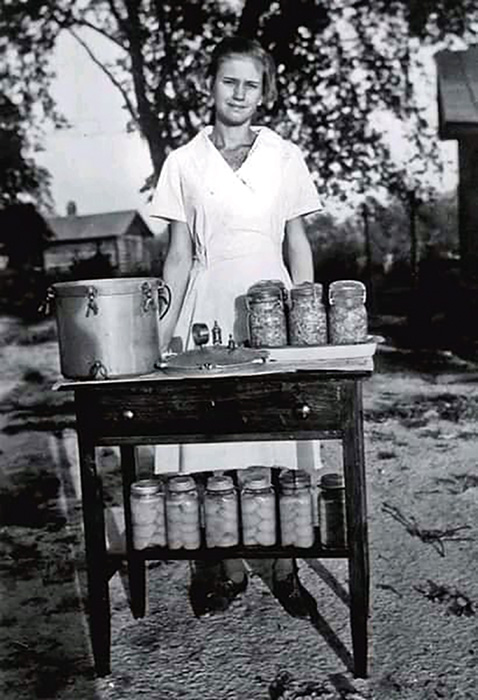
Marie Cromer, a rural school teacher, organizes the Aiken County Girls’ Tomato Club in South Carolina. She offered a $140 college scholarship to the girl who planted, grew, and harvested the most tomatoes on a 1/10-acre plot. Canning clubs allow rural youth to gain technical knowledge, earn money and gain independence.
By 1913, more than 20,000 girls were enrolled in canning clubs. It would not be until 1933 that the Girls’ Tomato Clubs in America began welcoming girls of color to join their programs.
O.H. Benson suggests the need for a fourth ‘H,’ standing for “Head, Heart, Hands and Hustle,” stating that hustle would refer to ready service to develop health and vitality. A 4-leaf clover symbol was approved in 1911. Later that year, 4-H leader O.B. Martin suggested that the fourth H signify “Health,” as it remains today.
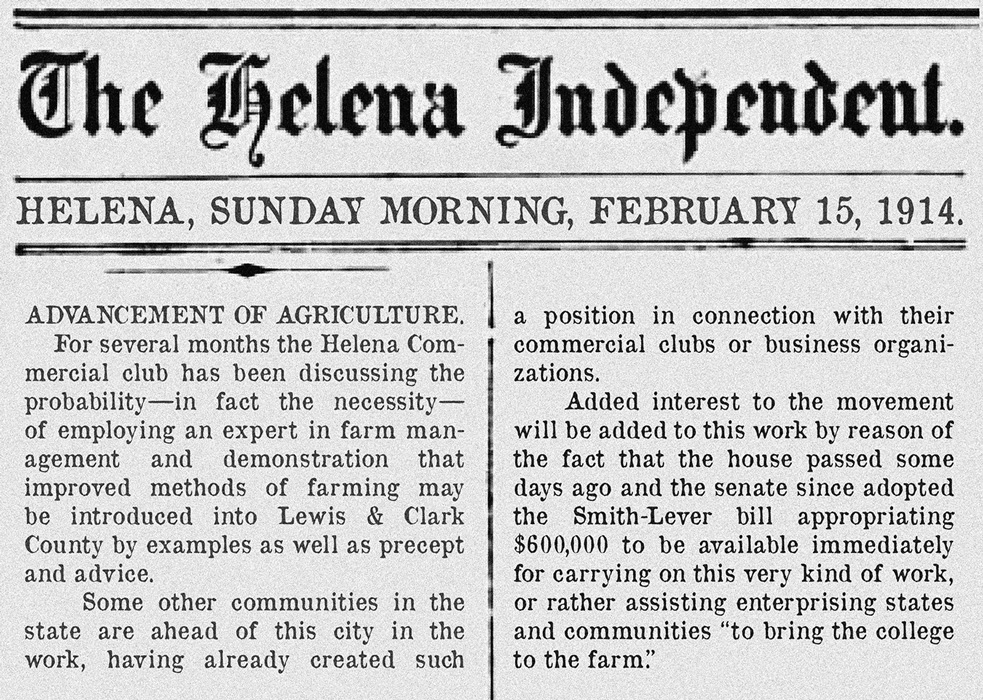
Congress passes the Smith-Lever Act of 1914, establishing the national Cooperative Extension System. Extension connect land-grant universities with the US Department of Agriculture to provide agricultural and home economics education to rural Americans. The 4-H program is formalized through the passage of Smith-Lever, and administered by the Cooperative Extension Service.
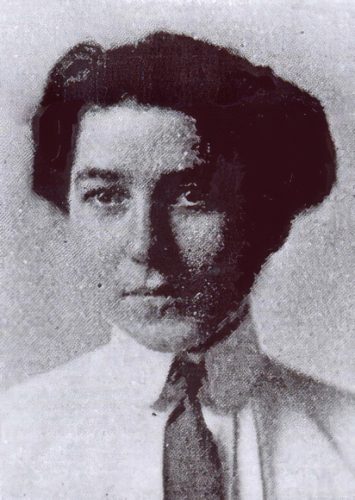
Augusta Evans was hired by the Montana Cooperative Extension Service to organize Boys & Girls clubs, the predecessor to 4-H clubs. During 1915, she organized 119 corn clubs, 119 potato clubs, 25 home garden clubs and 175 canning clubs. She enrolled nearly 2,700 youth. In addition to forming clubs, she gave canning demonstrations, spoke to rural teachers and women’ clubs and prepared Montana delegates for the 1914 National Conference of Club Leaders in Chicago. Evans was inducted in to the National 4-H Hall of Fame in 2008.
Lorem ipsum dolor sit amet, consectetur adipiscing elit. Ut elit tellus, luctus nec ullamcorper mattis, pulvinar dapibus leo.
Lorem ipsum dolor sit amet, consectetur adipiscing elit. Ut elit tellus, luctus nec ullamcorper mattis, pulvinar dapibus leo.
Lorem ipsum dolor sit amet, consectetur adipiscing elit. Ut elit tellus, luctus nec ullamcorper mattis, pulvinar dapibus leo.